Appointment New Patient Appointment or 214-645-8300

UT Southwestern Medical Center has established one of the leading acoustic neuroma programs in the United States. We are nationally recognized for the expert care our specialists provide to evaluate and treat both adults and children.

As a primary referral center for acoustic neuromas (also called vestibular schwannomas), we offer a comprehensive range of personalized, leading-edge treatment options – from observation of tumors to advanced radiosurgery and expert surgical care. Our team treats about 200 new patients each year. We follow hundreds more to provide ongoing care.

At UT Southwestern, one of our goals is to be at the forefront of medicine and technology to help patients. This supports our ability to achieve outstanding results, including helping patients with acoustic neuromas maintain quality of life and preserve hearing.

The UT Southwestern acoustic neuroma team sees patients promptly. This includes same- and next-day appointments when possible, as well as options for telehealth visits.

Internationally Recognized Leaders

While acoustic neuromas are rare and usually benign, they can be serious and can cause hearing loss. Treating the tumors can be complex because of the close proximity of critical blood vessels and nerves. This is where UT Southwestern’s Acoustic Neuroma program excels. Our surgeons are guest lecturers throughout the world, providing information on advances in treating acoustic neuromas and how results and be improved for patients.

Research shows experienced programs like ours — those that see larger numbers of patients with acoustic neuromas — achieve better results than lower-volume centers. At UT Southwestern, more than 200 patients a year rely on our specialists for care. As one of the highest-volume centers in the country, our goal is to leverage the expertise of internationally recognized leaders in treating acoustic neuroma to provide advanced, multidisciplinary care that is tailored to each patient.

Expert Multidisciplinary Care Team

Our doctors are fellowship-trained in the advanced treatment of acoustic neuromas. They lead our multidisciplinary approach to care for these tumors. The care team includes:

  • Neurotologists (specialists in disorders of the ear and skull base) and neurosurgeons skilled in complex skull base surgery
  • Audiologists and vestibular physical therapists experienced in managing hearing and balance symptoms, which are common in patients with acoustic neuroma
  • Radiation oncologists, as needed

Our team of surgeons, medical doctors, radiation oncologists, radiologists, and other care team members holds monthly conferences. At these conferences, individual cases are evaluated and reviewed, and care plans are formulated jointly among specialists. Input from this team is based on the extensive clinical experience of UT Southwestern’s physicians and the latest published treatment recommendations.

Comprehensive Care Designed To Maintain Quality of Life

Our specialists work closely with each patient and their family to design a personalized treatment plan that not only takes into account tumor location and size, but also the patient’s personal goals and other life factors.

Partnering with Our Patients

Having patients informed about and actively engaged in discussing treatment options is key to our approach to care. When determining appropriate care plans, our physicians consider:

  • The size and growth rate of the acoustic neuroma
  • The patient’s overall health
  • Signs and symptoms the patient is experiencing

Treatment options that our UT Southwestern Acoustic Neuroma Program offers include:

Observation

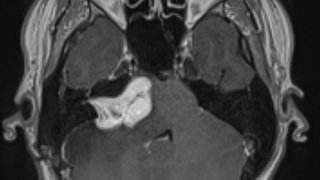
Some patients, particularly those with smaller, slow-growing tumors, don’t require immediate treatment. We may recommend monitoring these cases. With this watch-and-wait approach, our physicians use advanced imaging to look for changes that could signal the need for additional treatment.

Radiosurgery

Gamma Knife radiosurgery is a noninvasive, precisely focused dose of radiation that targets a tumor with the goal of stopping its growth. Key advantages of radiosurgery for patients include minimal recovery time and preserving quality of life. It is performed on an outpatient basis. Many of our patients have no symptoms immediately after having this procedure.

Microsurgical Resection

Microsurgical resection techniques let us safely remove the tumor while preserving facial nerve function whenever possible. This option is best for patients with larger or more complex tumors, as well as those with smaller tumors where preserving hearing is possible.

Leading-Edge Surgical Care to Treat Acoustic Neuromas

The acoustic neuroma team at UT Southwestern is skilled in the full range of approaches to surgical removal of tumors based on size, location, and other patient characteristics. UT Southwestern is the only medical center in Texas — and one of just two in the U.S. — to offer invisible acoustic neuroma surgery (transpromontorial approach), an innovative, minimally invasive procedure to remove these noncancerous tumors through a tiny incision in the ear canal.

There are three surgical approaches available at UT Southwestern to remove acoustic neuromas:

  • Translabyrinthine: With this approach, an incision is made behind the ear, and the bone behind the ear is removed. The inner ear is then removed, allowing a wide view of the tumor. Because the inner ear is removed, total hearing loss is expected. However, with this approach, the brain does not require retraction, and the largest tumors can be removed. Fat from the abdomen is used to fill in the surgical defect. Translabyrinthine procedures are the most commonly performed to remove tumors.
  • Middle fossa: This approach is used to remove small tumors in patients with good hearing. An incision is made above the ear, and a small piece of the skull is removed (it is replaced at the end of the surgery). The temporal lobe of the brain is retracted, and the bone over the internal auditory canal is removed, allowing access to the tumor, which is then removed. The goal of the middle fossa approach is hearing preservation, which is achieved in approximately 70% of cases.
  • Retrosigmoid: This approach is also used for small to medium tumors that have developed primarily in the skull cavity in a space that is between the ear and the brain. We make an incision behind the ear and remove a small piece of the skull, allowing a wide view of the brain cavity. We then remove the tumor. Hearing preservation is sometimes possible with the retrosigmoid approach.

Pioneering Ear Surgery Removes Tumors, Improves Hearing

Lloyd Griffith relished the noise that comes from a love of fixing cars and racing​ until the day a tumor in his ear caused his hearing to go from garbled to silent. Today his hearing is much improved, thanks to a pioneering minimally invasive procedure at UT Southwestern Medical Center – one of the highest-volume acoustic neuroma programs in Texas.

Hearing Impairment and Acoustic Neuromas

The natural course of an untreated acoustic neuroma is hearing loss in the affected ear. Surgery or radiosurgery can also result in hearing loss. Many patients adjust well to hearing in only one ear. Other patients may want to consider a few options, including wearing a:

  • Contralateral routing of signal (CROS) hearing aid: This consists of a hearing aid in the ear with poorer hearing that transmits sounds to a hearing aid in the other ear.
  • Bone-anchored hearing aid (BAHA): The device routes sound through the bones of the skull into a patient’s good ear. We surgically implant it during an outpatient procedure that takes less than 30 minutes to perform.

In selective cases, we also employ cochlear implantation for some patients with a vestibular schwannoma. This may be in combination with tumor surgery or after radiosurgery.

UT Southwestern offers additional care for both adult and pediatric acoustic neuroma patients who experience hearing loss.

About Acoustic Neuromas

An acoustic neuroma is a benign (nonmalignant) tumor that originates on the nerves affecting hearing or balance. These nerves are located deep in the skull and are very close to other important nerves and blood vessels. Patients with acoustic neuromas can experience a range of symptoms, including hearing loss, ringing in the ear, problems with balance, headaches, facial numbness, or facial weakness.

Acoustic neuromas are more common in people who are in their 40s or 50s, but can be seen in children as well, although those cases are rare. Acoustic neuromas in children may be the result of neurofibromatosis type 2-related schwannomatosis (NF2) or other genetic disorders. Our UT Southwestern Acoustic Neuroma Program is experienced in treating these types of tumors.

If you have an upcoming appointment that is eligible to transition to a video visit, we recommend patients sign up with MyChart. Virtual visits can accomplish a variety of appointment objectives, such as a comprehensive history examination, updating medications, and discussing symptoms.

Virtual visits are a safe and convenient way to get access to a broad spectrum of UT Southwestern specialists. These specialists are the same ones you would see if you came into the clinic, but you will be in the comfort of your own home, which allows you to continue the self-isolation recommendations while keeping yourself and the community safe.

If you don’t have the necessary technology for a video visit, your provider may consider conducting a phone appointment. For an appointment, please call 214-645-8898.

Research and Clinical Trials

UT Southwestern conducts clinical trials aimed at improving the diagnosis and treatment of brain conditions such as acoustic neuromas. Talk with our doctors to see if a clinical trial is available.